











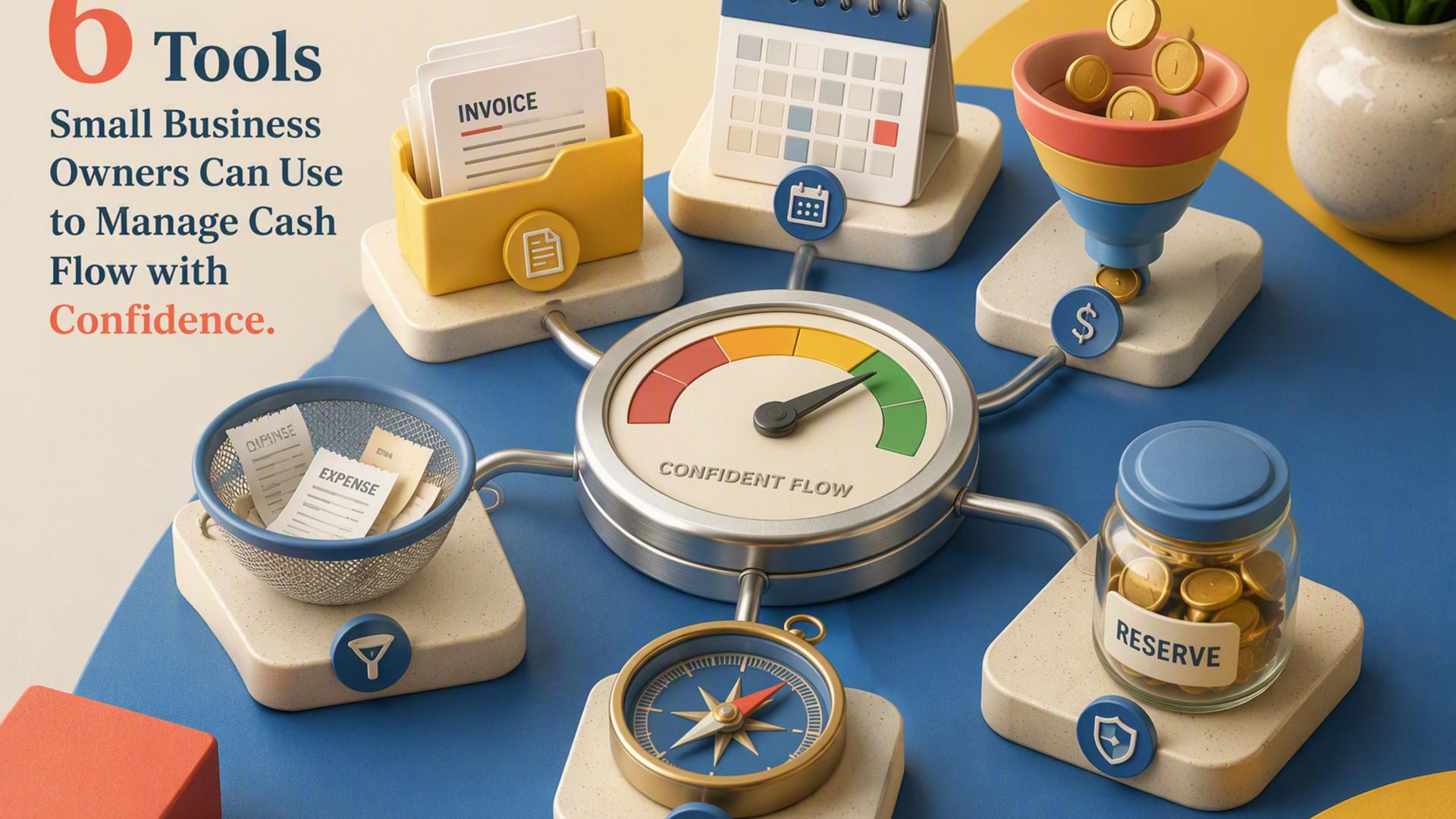
6 Tools Small Business Owners Can Use to Manage Cash Flow with Confidence
For any small business, cash flow is a core health indicator. A company may show a paper profit yet still be unable to survive if expected payments do not arrive before its own bills fall due. Not having a clear view of money entering and leaving the business over the coming thirty, sixty, or ninety days is a recurring source of pressure for many owners.
Fortunately, cash flow difficulties are seldom the result of insufficient funds alone. More often, they stem from limited visibility. When owners understand what they hold, what customers owe them, what they need to pay, and when those transactions are likely to occur, they can plan, prevent gaps, and make decisions using reliable information instead of assumptions. The following six platforms provide that type of visibility for small business owners.
1. Sage Accounting: Financial Management and Cash Flow Forecasting
Sage Accounting provides the starting point for a clear cash flow view. It links with bank accounts, automatically imports transactions, monitors unpaid invoices and future payments, and creates forecasts using actual financial information. Instead of recreating a spreadsheet forecast each month, Sage keeps a live, regularly refreshed picture of cash availability and indicates how much money may be on hand throughout the coming weeks and months.
Sage automatically calculates GST, HST, PST, and QST for Canadian small businesses. As a result, these tax requirements, often among the largest foreseeable cash outflows, remain included in the forecast rather than becoming unexpected costs.
Why it matters: Up-to-date cash flow insight based on dependable financial data enables owners to manage ahead of issues instead of responding after they arise.
2. Pleo: Smart Business Spending Platform
Business spending can weaken small business cash flow without an owner immediately noticing. When team members use personal cards or petty cash for company purchases, the real operating cost may not be apparent until expense claims are filed. Pleo is a smart spending platform that provides business cards to team members, records receipts when purchases happen, automatically categorizes spending, and connects with accounting software to make every dollar spent visible in real time.
For owners overseeing a small team, Pleo’s day-to-day spending insight shifts cash flow management from a once-a-month task to an ongoing process.
Why it matters: Seeing all company spending as it occurs keeps the cash flow view complete and prevents accounting records from falling behind business activity.
3. Relay: Business Banking Platform
A business bank account that clearly displays balances, automatically categorizes transactions, and supports separate accounts for distinct purposes—such as a tax reserve, operating account, and savings buffer—is a fundamental part of strong cash flow management. Relay is a business banking platform for Canadian businesses that provides these capabilities, including multiple accounts, no monthly fees, and direct accounting software integration.
At a glance, an owner can confirm that the tax reserve is funded, the operating account can cover the next thirty days of expenses, and the payroll account is prepared for the next pay run. This can substantially reduce the daily stress associated with cash flow.
Why it matters: Business banking structured around purpose-specific accounts, combined with accounting software integration, makes cash management clearer, more deliberate, and far less stressful.
4. Float: Cash Flow Forecasting Platform
Float is a purpose-built cash flow forecasting platform that integrates with accounting software to produce visual, scenario-based projections. It allows small business owners to understand what their cash position could look like under varying conditions. If a substantial invoice is paid late, an unexpected major expense appears, or a new contract is secured, Float makes it possible to model the impact right away and assess the change to the cash runway.
For owners who find it too time-consuming to keep spreadsheet forecasts consistently updated, Float automates the forecasting process and displays the results in a clear, actionable format.
Why it matters: Real-time scenario modelling can reveal a developing cash flow issue weeks before it occurs, allowing time to act instead of forcing a rushed response.
5. Expensify: Expense Management Platform
Expenses incurred by employees and owners can create two simultaneous cash flow issues when they are not recorded and processed quickly. Unprocessed costs can overstate the cash that appears available, while several claims submitted at the same time can create a sudden payment increase. Expensify is an expense management platform through which owners and team members can submit costs as they happen, supported by automatic approval workflows and direct accounting software integration.
Consistent real-time expense capture and processing ensure that forecasts reflect the full cost position rather than only part of it.
Why it matters: Processing and recording expenses in real time removes hidden costs that can skew cash flow visibility and lead to unanticipated payment requirements.
6. Plooto: Business Payment Automation Platform
The effort and delays involved in sending and receiving payments are among the most persistent pressures on small business cash flow. Issuing checks, manually starting bank transfers, and following up with customers for payment can all introduce delays that complicate cash management. Plooto is a payment automation platform used by Canadian businesses that enables owners to pay suppliers, collect customer payments, and automate approval workflows through one dashboard.
With payments handled more quickly, funds arrive sooner, while payment records automatically flow into accounting software so the books reflect the money that has actually moved.
Why it matters: Automated, faster payment processing supports more predictable money movement and ensures cash flow forecasts reflect current activity rather than delayed payment records.
Frequently Asked Questions
What typically causes cash flow issues for small businesses?
Delayed customer payments, weak forecasting, and failing to separate business finances from personal finances are the most frequent causes. Each can be addressed through an appropriate mix of habits and tools. Automated invoicing and payment reminders can reduce late payment, cash flow forecasting software supplies the visibility required for planning, and a dedicated business bank account keeps the financial position clear.
How far into the future should a small business forecast cash flow?
As a minimum, most financial advisors advise maintaining a rolling thirteen-week cash flow forecast. This period offers sufficient visibility to spot possible shortfalls early enough to respond, whether by speeding up collections, postponing a non-essential expense, or arranging short-term finance. Some businesses forecast further ahead for planning, especially where substantial seasonal revenue changes or significant capital expenditure are anticipated.
How do cash flow and profit differ?
Profit is the amount remaining after every cost has been deducted from revenue for a particular period. Cash flow concerns the real movement of money into and out of the business at specific times. For instance, a business may be profitable but have negative cash flow when it has billed clients for work that remains unpaid. Understanding both figures and their relationship is among the most valuable financial skills a small business owner can build.
In what ways does accounting software support cash flow management?
Effective accounting software links to bank accounts, records each incoming and outgoing payment, keeps a live record of unpaid invoices and upcoming bills, and forecasts the cash position using that information. This creates an accurate, current view of cash flow without the need for manual data collection or calculations. Forecasting tools in modern accounting platforms are especially useful because they show the financial effect of approaching obligations before those obligations become due.
Is a cash reserve necessary, and what amount should a business hold?
Most financial advisors advise small businesses to keep a cash reserve equal to at least three months of operating expenses. This buffer helps a business withstand unexpected revenue declines, late-paying clients, or abrupt cost increases without immediately affecting its ability to meet obligations. For most small businesses, gradually building the reserve by moving a percentage of monthly revenue into a dedicated account is more attainable than attempting to save the entire amount at once.






